

The Uncharted Path: Unlocking Explosive Growth with Self-Serve Products
Remember the good old days? The polished sales pitches, the lengthy demos, the intricate dance between prospect and salesperson. It was a ritual, a carefully choreographed ballet designed to guide a potential customer from curiosity to conversion. But then, something shifted. The internet didn’t just connect us; it empowered us. Suddenly, people didn’t want to be sold to; they wanted to discover, to try, to experience for themselves. This quiet revolution gave birth to a new frontier in business: self-serve product growth.
Imagine standing at the edge of a vast, untapped wilderness. Traditional paths are well-worn, but slow. The self-serve path? It’s exhilarating, unpredictable, but promises breathtaking vistas and rapid expansion if you dare to blaze your own trail. This isn’t just a strategy; it’s a philosophy, a fundamental belief in the user’s ability to navigate their own journey, discover value, and ultimately, become a loyal advocate – all with minimal human intervention.
The Epiphany: Why Self-Serve Isn’t Just an Option, It’s the Future
For years, the conventional wisdom dictated that complex products required a human touch. Enterprise software, B2B tools – these were the domains of dedicated sales teams and extensive onboarding processes. But users, particularly those growing up in a world of instant gratification, started to chafe. They wanted to download, sign up, and start using right away. The friction of waiting for a demo, scheduling calls, and sifting through sales jargon became a deterrent, not an aid.
This shift presented a profound challenge and an even greater opportunity. Companies that embraced this user-centric mindset began to see incredible results. They realized that by lowering the barrier to entry, by letting the product speak for itself, they could achieve a level of product-led growth strategy previously unimaginable. Instead of pushing sales, they were pulling users in with the sheer magnetism of a valuable, accessible tool.
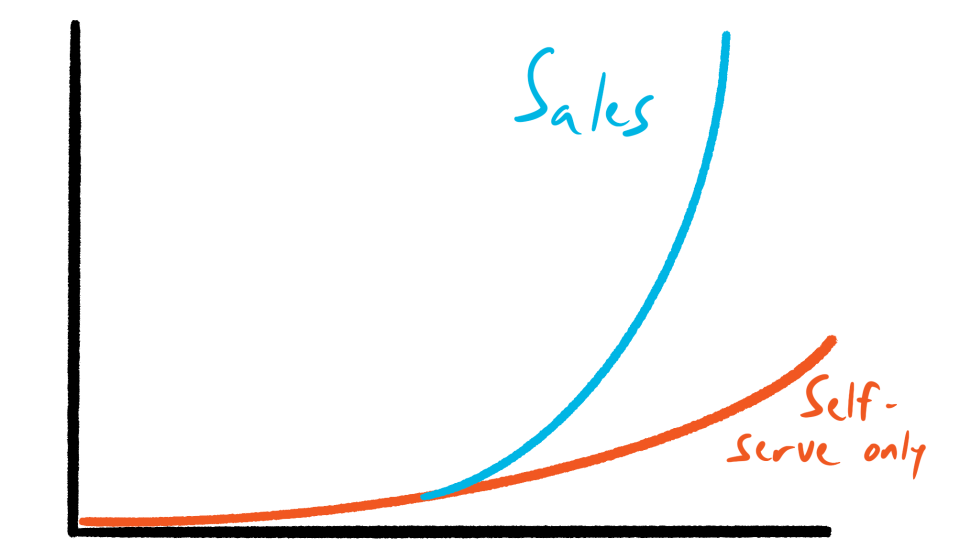
Think about the sheer inefficiency of traditional sales. Every lead requires human attention, every demo takes time, every negotiation drains resources. While necessary for some high-touch sales, this model becomes a bottleneck when you’re aiming for exponential scaling. Self-serve, on the other hand, is a machine designed for volume. It allows you to reach hundreds, thousands, even millions of potential users simultaneously, letting them qualify themselves through their interaction with your product. This isn’t just about cutting costs; it’s about fundamentally reshaping your SaaS growth hacking approach to be more efficient and user-friendly.
Building the Frictionless Gateway: Onboarding is Your First Impression
Your product might be a marvel of engineering, a solution to a widespread problem, but if a new user can’t figure out how to use it within minutes, it might as well not exist. In the self-serve world, your onboarding isn’t just a feature; it’s your entire sales team, your customer support, and your first impression all rolled into one. It’s where you truly make or break the user experience.
Imagine a bustling marketplace. You want your stall to be inviting, easy to understand, and immediately showcase your best wares. Similarly, for self-serve products, user onboarding optimization is paramount. The journey from sign-up to that first "aha!" moment – the point where a user truly grasps the value of your product – must be as smooth as silk.
How do you achieve this?
- Intuitive Design: The product should feel natural to use. Buttons should be where users expect them, actions should have clear outcomes, and visual cues should guide them effortlessly. Resist the urge to over-explain; let discovery be part of the fun.
- Clear Value Proposition: Right from the moment they land on your page, users need to understand what your product does and why it matters to them. Don’t bury the lead.
- Guided Tours, Not Lectures: Instead of lengthy video tutorials or dense text manuals, offer interactive walkthroughs that guide users through key features as they engage with them. Think of it as a helpful friend showing you around, rather than a professor lecturing from the front of the class.
- Progressive Disclosure: Don’t overwhelm users with every single feature at once. Introduce core functionalities first, then gradually reveal more advanced options as they gain confidence. This helps drive digital product adoption organically.
- Quick Wins: Design the initial experience to deliver a small, tangible success very quickly. Can they create their first project? Send their first message? See their data visualized? That immediate gratification is incredibly powerful for cementing early engagement.
Remember, every step of the onboarding process is a test. If a user gets stuck, confused, or bored, they’re likely to churn before they even truly begin. Your product needs to be its own best teacher, and a great onboarding flow is the curriculum.
The Freemium Lure and Beyond: Monetization in Motion
Once users are onboarded and experiencing value, the next frontier is monetization. And for many self-serve products, the freemium model success story is a compelling blueprint. Offering a free tier isn’t just a marketing gimmick; it’s a powerful acquisition engine. It lowers the entry barrier to zero, allowing a massive audience to test-drive your product without any financial commitment.
But the trick isn’t just giving things away for free. It’s about strategically designing your free tier to offer significant value, enough to solve a minor problem, but also to hint at the greater potential locked behind a paywall. The goal is to make users realize, "This is great, but imagine how much more I could do if I upgraded!"
This is where the art of the upgrade path comes in. It’s not about strong-arming users; it’s about presenting a clear, compelling case for paying. This often involves:
- Feature Gating: Limiting advanced features, higher usage limits, or premium support to paid tiers.
- Usage Limits: Capping the number of projects, storage, or collaborators in the free version.
- Value-Based Pricing: Ensuring your paid tiers offer disproportionately more value for the price.
Understanding user behavior is critical here. By analyzing how free users engage with your product – which features they gravitate towards, where they hit limitations – you can identify natural points for conversion. This data-driven approach to monetization strategies SaaS ensures your upgrade offers are relevant and timely.
Moreover, your product should facilitate the upgrade itself. A "upgrade now" button should be prominently displayed when a user encounters a paid feature or hits a limit. The process should be simple, secure, and instant. Friction in the payment process is just as detrimental as friction in onboarding. Think of it as conversion rate optimization tools applied directly within your product, guiding users seamlessly from free exploration to committed customers.
Data as Your North Star: Listening to the Silent Users
In the self-serve world, you don’t have sales reps reporting back on customer objections or support teams logging every frustrated call. Your users are interacting directly with your product, and their actions (or inactions) are telling a story. Your job is to listen intently. This is where self-service analytics becomes your most potent weapon.
Every click, every scroll, every feature used (or ignored) generates data. This data isn’t just numbers; it’s a direct line to understanding user behavior, identifying pain points, and discovering those elusive "aha!" moments.
- Where do users get stuck? High drop-off rates on a particular step in a workflow might indicate a confusing design or a bug.
- Which features are most popular? This tells you what users value most and where to focus your development efforts.
- What separates your most engaged users from those who churn? Understanding these differences can reveal critical insights into activation and retention.
Tools for product analytics, heatmaps, session recordings – these are your eyes and ears in the self-serve wilderness. They allow you to observe user journeys, pinpoint where the trail gets rough, and understand what delights them.
Armed with this knowledge, you can constantly iterate and improve. A/B testing different onboarding flows, feature placements, or messaging becomes a powerful way to optimize your product for growth. This continuous cycle of data collection, analysis, and improvement is the engine of product experience management. It ensures your product is always evolving to meet user needs, anticipating their desires, and proactively removing obstacles. It’s about letting the data whisper secrets that lead to profound improvements, without ever needing a formal customer interview.
Nurturing the Ecosystem: Retention and Expansion
Acquiring new users is exhilarating, but true self-serve product growth isn’t just about the initial land grab. It’s about building a loyal community, fostering long-term engagement, and turning satisfied users into enthusiastic advocates. This is where retention marketing strategies take on a unique, product-centric flavor.
In a self-serve model, retention is baked into the product experience itself. A truly great product keeps users coming back because it consistently delivers value, is easy to use, and evolves with their needs. But you can do more:
- In-App Messaging: Use targeted messages to guide users to new features, offer tips, or celebrate their achievements. This isn’t intrusive sales; it’s helpful guidance that enhances their experience.
- Personalized Communication: Even in a self-serve world, a touch of personalization goes a long way. Segment users based on their behavior and tailor email campaigns or in-app notifications to their specific needs or usage patterns.
- Self-Help Resources: Build a robust knowledge base, FAQs, and forums. Empower users to find answers to their own questions, reducing reliance on direct support and strengthening their independence.
- Community Building: Create spaces where users can connect with each other, share tips, and offer feedback. This fosters a sense of belonging and turns individual users into a collective force.
By focusing on user success and continuously enhancing the product experience, you naturally increase customer lifetime value improvement. Happy users stay longer, use your product more deeply, and are more likely to upgrade to higher tiers or recommend you to others. Conversely, neglecting user experience leads to churn reduction strategies becoming a frantic firefighting exercise rather than a natural outcome of a well-designed product. In the self-serve journey, every happy user becomes a tiny, unpaid salesperson for your brand.
Scaling the Summit: Automated Journeys and Sustainable Growth
The ultimate vision of self-serve product growth is a system that largely runs itself. A product so intuitive, so robust, and so well-supported that users can find, adopt, pay for, and troubleshoot it with minimal human intervention. This is where the power of automated customer journey design truly shines.
Imagine a finely tuned machine where every gear meshes perfectly. From the moment a user discovers your product to their ongoing engagement and eventual renewal, the journey is largely automated. This involves:
- Proactive Support: Instead of waiting for users to encounter problems, anticipate common issues and provide in-app guidance or tooltips before they even arise.
- Smart Nudges: Use AI-driven insights to suggest relevant features, offer personalized tips, or prompt actions that lead to deeper engagement, all within the product itself.
- Seamless Upgrades & Downgrades: Make changing subscription tiers as easy as a few clicks, empowering users to adjust their plan as their needs evolve.
- Automated Feedback Loops: Integrate mechanisms for users to easily provide feedback, bugs, or feature requests directly within the product, allowing you to constantly gather insights for improvement.
This level of automation drastically reduces your customer acquisition cost reduction because your product is doing much of the heavy lifting that traditionally required human resources. It frees up your teams to focus on strategic initiatives, complex problem-solving, and truly innovative development, rather than repetitive tasks.
The result is a highly scalable growth model. Your ability to acquire, onboard, and retain users is no longer limited by the size of your sales or support teams. Instead, it scales directly with the quality and reach of your product. This isn’t just about efficiency; it’s about building a resilient, future-proof business that can adapt and grow in an ever-changing digital landscape. You’re not just selling a product; you’re cultivating an independent, thriving ecosystem.
The Journey Continues
The self-serve product growth journey is not a destination; it’s a continuous expedition. It demands courage, creativity, and an unwavering commitment to your users. It means constantly refining your product, listening to your data, and empowering individuals to find their own success within your ecosystem.
The path might be uncharted, but the rewards are immense: explosive growth, unparalleled scalability, and a truly passionate user base. So, are you ready to embark on this adventure? The future of product growth isn’t about selling harder; it’s about building better, enabling more, and letting the power of your product speak for itself. It’s a brave new world, and the compass is in the hands of your users.