The Unstoppable Force: How Growth Marketing Experimentation Fuels Sustainable Business Success

The Unstoppable Force: How Growth Marketing Experimentation Fuels Sustainable Business Success
Imagine you’re a captain navigating a vast ocean. You have a destination in mind – let’s call it "sustainable business growth." Traditional marketing often feels like setting sail with a fixed map, hoping for the best. You follow the path, launch campaigns, and cross your fingers, only finding out months later if you hit a storm or a jackpot. But what if you could constantly adjust your sails, test the currents, and even discover new, faster routes to your destination, all in real-time? This, my friends, is the heart of growth marketing experimentation. It’s not just a fancy term; it’s a fundamental shift in how businesses approach reaching their customers and achieving their goals.
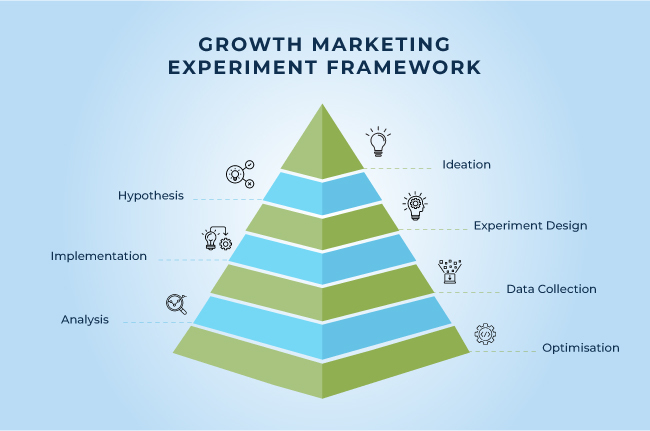
At its core, growth marketing isn’t about one-off campaigns. It’s a continuous cycle of testing, learning, and iterating across the entire customer journey – from how people first discover you to how they become loyal advocates. And the engine driving this cycle? Marketing experimentation frameworks. Think of it as a scientific method applied to your marketing efforts. Instead of making educated guesses, you formulate hypotheses, run controlled tests, analyze the data, and then apply what you’ve learned. This process is particularly vital for conversion rate optimization (CRO), ensuring that every touchpoint with a potential customer is as effective as possible.
Let’s rewind a bit. Many businesses, especially startups and those eager for rapid scaling, often get caught in the trap of "best practices." They see what a competitor is doing or read an article about a successful strategy and try to replicate it. While inspiration is great, blindly copying rarely works. Your audience is unique, your product is unique, and your market conditions are unique. This is precisely where A/B testing marketing becomes your superpower. Instead of assuming, you prove. You pit one version of a webpage against another, one email subject line against a different one, or even two distinct ad creatives, letting real users tell you what works better through their actions.
The Genesis of an Experiment: From Idea to Insight
Every successful experiment begins with a question, a problem, or an opportunity. Maybe your website has a high bounce rate on a specific landing page. Perhaps your email open rates are stagnant. Or maybe you’re looking to boost user acquisition strategies without increasing your ad spend exponentially. This is where you form a hypothesis. A hypothesis isn’t just a guess; it’s an educated prediction, often framed as "If we do X, then Y will happen because Z."
For instance, let’s say you run an e-commerce store. You notice that many visitors add items to their cart but don’t complete the purchase. Your hypothesis might be: "If we simplify the checkout process by removing optional steps, then our conversion rate will increase because the friction will be reduced." This clear statement provides direction for your digital marketing experiments.
Once you have a solid hypothesis, the next step is designing the experiment. This involves several critical considerations:
- What are you testing? Is it a headline, a call-to-action button color, a new product description, or an entirely different onboarding flow?
- What’s your metric for success? Is it conversion rate, click-through rate, time on page, or ultimately, customer lifetime value (CLTV)? Defining this upfront is crucial.
- What’s your control group and your variant? The control is the existing version, and the variant is the new version you’re testing.
- What’s your sample size and duration? You need enough data to ensure your results are statistically significant, not just random chance. This is a common pitfall, especially for beginners. Don’t stop an experiment too early just because you see an initial positive trend. Patience is key.
Executing and Analyzing: The Data-Driven Discovery
With your experiment designed, it’s time to launch. This is where tools come into play – A/B testing platforms, web analytics dashboards, and sometimes even specialized marketing analytics tools. These tools help you segment your audience, show different versions of your content, and track the performance of each.
Once the experiment has run its course and you’ve collected sufficient data, the real learning begins. This isn’t just about looking at the numbers; it’s about understanding what they mean. Did your variant outperform the control? By how much? Is the difference statistically significant? What insights can you glean beyond just the primary metric? For example, if a new email subject line led to higher open rates, did it also lead to more clicks on the links inside the email? This deeper dive prevents superficial conclusions.
This phase is where data-driven marketing truly shines. You’re not just making decisions based on gut feelings or the loudest voice in the room; you’re making them based on empirical evidence. This scientific approach minimizes risk and maximizes the potential for positive impact.
Iterate and Implement: Fueling the Growth Loop
The final, and perhaps most important, step in the experimentation cycle is acting on your learnings. If an experiment was successful, you implement the winning variant. This might mean permanently changing a button color, rolling out a new landing page design, or adopting a revised email sequence.
But what if an experiment "fails"? This is where the beauty of experimentation truly lies. In the world of growth marketing, there are no failures, only learnings. A "failed" experiment tells you what doesn’t work, saving you resources and time you might have otherwise invested in an ineffective strategy. It also provides invaluable data that can inform your next hypothesis. Perhaps your initial assumption was wrong, or maybe there’s another underlying issue you need to address. This continuous refinement is the essence of lean startup methodology for marketing.
This iterative process builds an experimentation culture within your organization. It shifts the focus from being right all the time to constantly learning and improving. It empowers teams to challenge assumptions and to always be looking for better ways to serve customers and drive results. This mindset is crucial for sustainable growth, as markets, technologies, and customer behaviors are constantly evolving.
Beyond A/B Testing: A Spectrum of Experiments
While A/B testing is perhaps the most well-known form of experimentation, the world of growth marketing is far broader. Here are a few other areas ripe for testing:
- User Onboarding Flows: How do new users experience your product or service? Testing different welcome emails, in-app tours, or setup guides can dramatically impact activation and retention.
- Pricing Experiments: What price point resonates best with your target audience? Testing different tiers, discount strategies, or payment plans can optimize revenue. This requires careful consideration and often segmenting your audience.
- Content Marketing Experiments: Which blog topics generate the most engagement? What format (video, infographic, long-form text) performs best? How do different calls to action within your content influence conversions? This also ties into performance marketing, where content isn’t just about brand awareness but measurable action.
- Channel Experiments: Are there new platforms or advertising channels you haven’t explored? Testing a small budget on a new social media platform or a niche advertising network can uncover untapped user acquisition strategies.
- Personalization Marketing: How can you tailor experiences for different user segments? Experimenting with dynamic content, personalized recommendations, or custom messaging can significantly boost engagement and conversions.
- Retention Marketing: Once you’ve acquired a customer, how do you keep them engaged and loyal? Testing different loyalty programs, re-engagement campaigns, or product update notifications can reduce churn and boost customer lifetime value.
Each of these areas presents opportunities for structured testing, providing actionable insights that traditional "launch and pray" marketing simply can’t offer.
Building the Machine: Tools and Team
You might be thinking, "This sounds great, but how do we actually do all this?" The good news is that there’s a thriving ecosystem of tools and best practices to support growth marketing experimentation.
- Analytics Platforms: Google Analytics, Mixpanel, Amplitude, etc., are essential for tracking user behavior, segmenting audiences, and measuring the impact of your experiments.
- A/B Testing Tools: Optimizely, VWO, Google Optimize (though phasing out, alternatives exist), and others allow you to easily set up and run tests on your website or app without complex coding.
- CRM Systems: Platforms like HubSpot, Salesforce, or Zoho CRM help manage customer data, segment lists, and track interactions, which is crucial for personalized experiments.
- Marketing Automation Platforms: Tools like Mailchimp, ActiveCampaign, or Braze enable you to automate email sequences, push notifications, and other communications that can be part of an experiment.
Beyond the tools, the team is paramount. An effective growth marketing team isn’t just a collection of individual marketers; it’s a cross-functional unit that often includes marketers, product managers, engineers, and data analysts. They share a common goal and a commitment to the experimentation mindset. Encouraging curiosity, a willingness to challenge assumptions, and a focus on learning over being "right" are vital for fostering a thriving experimentation culture.
Common Pitfalls to Sidestep
While the path of experimentation is powerful, it’s not without its potential stumbling blocks. Being aware of these can save you a lot of headaches:
- Lack of a Clear Hypothesis: Without a specific question or prediction, your experiment becomes a fishing expedition, and any "findings" will be difficult to act upon.
- Insufficient Sample Size or Duration: Ending an experiment too early or running it with too few participants can lead to misleading results, causing you to make incorrect decisions. Always aim for statistical significance.
- Testing Too Many Variables at Once: In an A/B test, you ideally want to test one primary change at a time. If you change five things at once, you won’t know which specific change caused the observed effect. This is where multivariate testing comes in, allowing for more complex tests but requiring significantly more traffic.
- Ignoring the "Why": Don’t just look at what happened; try to understand why it happened. Qualitative data, like user surveys or interviews, can complement your quantitative data and provide deeper insights.
- Not Documenting Results: Every experiment, successful or not, should be documented. This builds an institutional knowledge base, prevents repeating past mistakes, and informs future hypotheses.
- Focusing Only on Wins: As mentioned, "failed" experiments are invaluable learning opportunities. Don’t sweep them under the rug. Analyze them, understand the reasons, and apply those learnings.
The Unstoppable Momentum of Learning
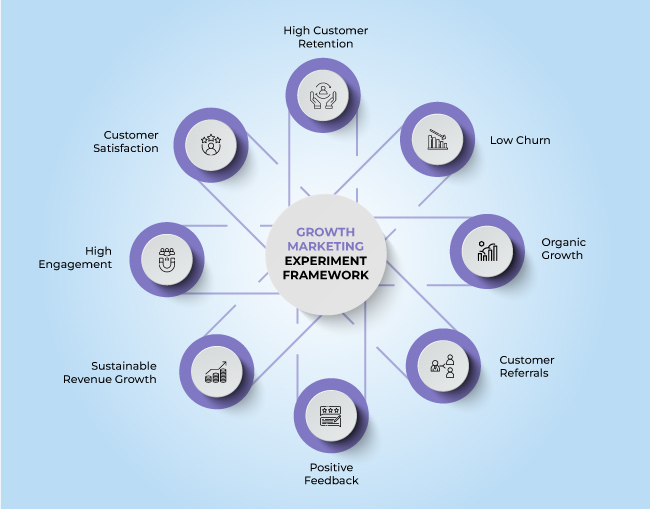
Ultimately, growth marketing experimentation isn’t just about tweaking buttons or subject lines. It’s about building an organization that is inherently adaptable, resilient, and continuously learning. It’s about understanding your customers at a deeper level than your competitors. It’s about optimizing every single touchpoint to deliver maximum value, leading to higher customer lifetime value and more efficient user acquisition strategies.
When you embrace this approach, your marketing efforts transform from a series of educated guesses into a robust, scientific process. You stop hoping for growth and start engineering it. You unlock the power of data-driven marketing to make informed decisions that propel your business forward. This isn’t just a trend; it’s the future of sustainable business success, an unstoppable force that continually optimizes and innovates.
So, if you’re ready to move beyond guesswork and into a realm of continuous discovery and proven results, it’s time to embark on your own journey of growth marketing experimentation. Start small, learn fast, and watch as your business not only grows but thrives with an intelligence and agility that sets it apart. The ocean of opportunity is vast, and with experimentation as your compass, you’re ready to navigate it with confidence.