The Unfolding Story: How Lifecycle Marketing Transforms Businesses into Lasting Relationships

The Unfolding Story: How Lifecycle Marketing Transforms Businesses into Lasting Relationships
Imagine you’re running a small coffee shop. Every morning, the door opens, and people walk in. Some are new faces, some are regulars, and some you haven’t seen in a while. Each person has a unique relationship with your shop, right? Lifecycle marketing strategy is just like that, but for any business, big or small. It’s about understanding and nurturing every step of a customer’s journey with you, from the very first time they hear your name to years down the line when they’re telling all their friends about how great you are. It’s not just about making a sale; it’s about building a real, lasting connection.
Think of it this way: your business isn’t a vending machine where someone puts in money and gets a product, end of story. It’s more like a blossoming friendship or a growing family. When you approach your customers with this mindset, focusing on their entire experience, you stop chasing one-off transactions and start cultivating incredible value. This isn’t some fancy, complicated scheme; it’s a natural way of thinking about how people interact with what you offer. It’s also a powerful way to make your marketing dollars work harder, leading to better customer lifetime value (CLV), which is simply how much a customer is worth to your business over the course of their entire relationship.
Chapter 1: The First Spark – When They First Notice You (Awareness & Acquisition)
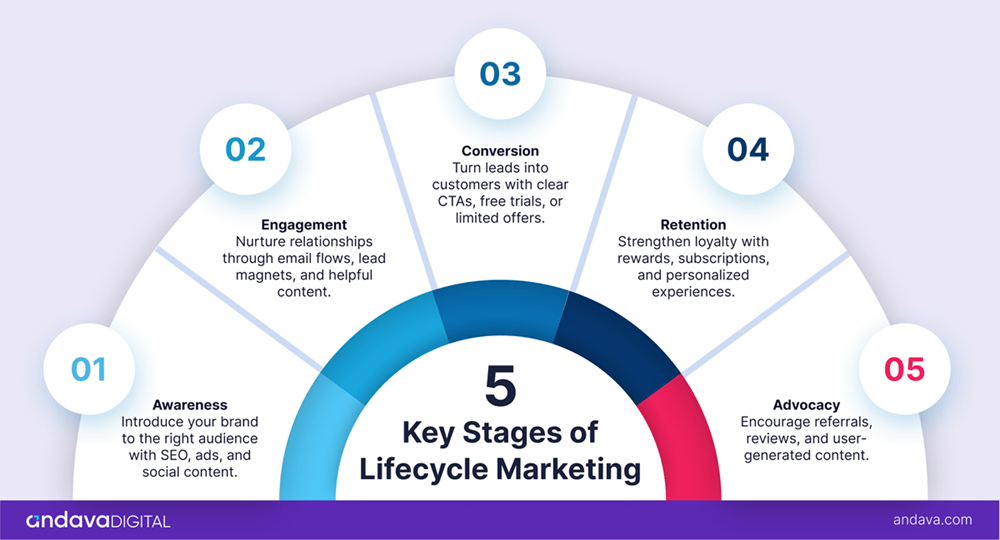
Before anyone can become a loyal customer, they first need to know you exist. This is like the very first glance across a crowded room. How do you catch their eye? This initial phase of the lifecycle marketing strategy is all about getting noticed by the right people. You want to attract folks who are genuinely interested in what you sell, not just anyone.
Maybe they’re searching online for a solution to a problem you solve. Perhaps they see a friend rave about your product on social media. Or maybe they stumble upon an interesting blog post you wrote that answers a question they had. These are all touchpoints for lead generation strategies. You might be creating helpful articles, running engaging social media campaigns, or placing targeted ads where your ideal customers hang out online. The goal here isn’t to sell immediately, but to introduce yourself and offer something valuable – a glimpse of what makes you special. We’re talking about inbound marketing tactics that draw people in naturally, rather than shouting at them. You want to make a good first impression, one that sparks curiosity and makes them want to learn more. Think about the language you use, the images you show, and the overall feeling your brand gives off. Is it inviting? Does it speak to their needs?
Chapter 2: Building Bridges – Turning Interest into Engagement (Consideration & Nurturing)
So, they noticed you. Great! Now what? You wouldn’t ask someone to marry you after the first glance, would you? The next step is about building a relationship, earning trust, and showing them you understand their needs. This is where you move from just being "seen" to being "considered."
This stage often involves what we call lead nurturing campaigns. Once someone shows a little interest – maybe they signed up for your newsletter, downloaded a free guide, or followed you on social media – you start providing them with more value. This isn’t a hard sell; it’s a gentle conversation. You might send a series of helpful emails using email marketing automation tools, sharing tips, case studies, or deeper insights related to their initial interest. The idea is to keep your brand top-of-mind, demonstrate your expertise, and build credibility.
Personalization plays a huge role here. Instead of sending generic messages, you try to tailor your communication based on what you know about them. If they downloaded a guide about dog training, you wouldn’t send them emails about cat food. This is the essence of personalization marketing, making each interaction feel like it’s just for them. It shows you’re listening and that you care about their specific situation. You’re trying to move them from "I know about them" to "I think they might be a good fit for me." You’re answering their questions, addressing their concerns, and slowly, surely, guiding them closer to a decision.
Chapter 3: The Moment of Decision – Making the Commitment (Conversion)
This is the big moment – when your potential customer decides to take the plunge and buy your product or service. After all the trust-building and nurturing, they’re ready to make a commitment. Your job here is to make that commitment as easy and pleasant as possible.
Imagine you’re at a shop, ready to buy something, but the checkout line is miles long, the cashier is grumpy, or the price isn’t clear. You might just walk away. The same applies online. This stage focuses on conversion rate optimization. This means making sure your website is clear, your product descriptions are compelling, your pricing is transparent, and the checkout process is smooth and secure. There should be no hidden fees, no confusing steps, and a clear "call to action" – telling them exactly what to do next, whether it’s "Buy Now," "Sign Up," or "Request a Demo."
Sometimes, a little extra nudge helps. Maybe it’s a limited-time offer, a free trial, or a guarantee that removes any last-minute doubts. The goal is to remove any friction that might prevent them from becoming a customer. For ecommerce conversion tips, things like clear product images, customer reviews, and easy payment options are vital. You’ve done all the hard work of attracting and nurturing; don’t let a clunky final step spoil the deal. Make it simple, clear, and reassuring.
Chapter 4: The Welcome Mat – Making Them Feel at Home (Onboarding & Retention)
Congratulations! Someone just bought your product or signed up for your service. Many businesses treat this as the finish line, but in lifecycle marketing, it’s just the beginning of the real relationship. This is where you make sure they’re happy with their decision and start laying the groundwork for long-term loyalty.
This phase begins with an excellent customer onboarding process. For a physical product, it might be a thoughtful "thank you" email, clear instructions, and easy access to support. For a service or software, it could be a series of tutorials, personalized welcome calls, or guided walkthroughs to help them get started quickly and see value right away. The faster they understand how to use what they bought and experience its benefits, the more likely they are to stick around.
This entire stage is about customer retention strategies. It’s much cheaper to keep an existing customer than to acquire a new one. After the initial onboarding, you continue to provide value. This could be through helpful content, product updates, exclusive tips, or excellent customer support. The post-purchase experience is incredibly important. Are you checking in to see if they’re satisfied? Are you offering help if they run into problems? Are you making them feel valued, not just like another number? A happy customer isn’t just a repeat buyer; they’re also a potential advocate for your brand.
Chapter 5: Deepening the Connection – Turning Customers into Fans (Advocacy & Growth)
Now you have a happy customer. How do you turn them into a raving fan who tells everyone they know about you? This stage is about nurturing that relationship, encouraging them to buy more, and inspiring them to spread the word.
One way to do this is through customer loyalty programs. Think points systems, exclusive discounts, early access to new products, or special recognition for long-term customers. These programs make customers feel appreciated and give them a reason to keep coming back. It’s like a VIP pass – who doesn’t love feeling special?
You also look for opportunities to help them even more through upselling and cross-selling. If they bought a camera, maybe they need a lens bag or a tripod. If they use your basic software, perhaps they’d benefit from an advanced feature. This isn’t about pushing unwanted products; it’s about genuinely enhancing their experience with complementary items or upgrades that truly add value. This is where understanding their needs deeply pays off.
Finally, and perhaps most powerfully, you encourage referral marketing strategy. Happy customers are your best salespeople. Ask them for reviews, testimonials, or to share their experience on social media. Set up a referral program where they get a reward for bringing new customers to your business. When a friend recommends something, we trust it far more than an ad. This turns your existing customer base into a growth engine.
Chapter 6: A Helping Hand – Bringing Back the Drifters (Re-engagement & Win-back)
Even in the best relationships, sometimes people drift apart. Maybe a customer stopped buying, hasn’t logged into their account in a while, or hasn’t opened your emails. This doesn’t mean the relationship is over; it just means it’s time to reach out and try to reconnect.
This stage is all about churn prevention strategies. Churn is when customers leave you. To prevent it, you need to identify when customers are showing signs of disengagement. Maybe they haven’t made a purchase in a certain amount of time, or their usage of your service has dropped. When you spot these signs, you spring into action.
You might send a personalized email saying, "We miss you!" or "Is everything okay?" You could offer a special discount to entice them back or highlight a new feature they might find useful. These are often called win-back campaigns. The key is to remind them of the value they once found in your business and give them a compelling reason to return. Sometimes, all it takes is a friendly reminder and a fresh offer to rekindle that connection. Don’t give up on customers too soon; a little effort can often bring them back into the fold.
Chapter 7: The Master Weaver – Connecting All the Threads (The Big Picture)
So, how do you manage all these different stages and interactions for hundreds, thousands, or even millions of customers? This is where technology and a clear plan come into play. You can’t just wing it; you need a system.
The cornerstone of managing your customer relationships across all these stages is a CRM marketing strategy (Customer Relationship Management). A CRM system is like your business’s memory bank. It stores all the information about your customers – their names, their purchase history, their interactions with your website, their email opens, everything. This central hub allows you to track where each customer is in their journey and tailor your communication accordingly. It’s the engine that powers effective personalization marketing.
You also need a clear customer journey mapping. This means literally drawing out the path your customers take, from discovery to advocacy. What are their pain points at each stage? What questions do they have? What emotions are they feeling? By understanding this map, you can design specific marketing messages and actions for each point.
Marketing automation software becomes your assistant, helping you send the right email at the right time, track customer behavior, and manage campaigns without you having to manually do everything. This frees you up to focus on strategy and creativity, rather than repetitive tasks. It helps you keep track of things like customer acquisition cost versus the long-term value, ensuring your efforts are always smart.
Ultimately, this whole approach is a continuous cycle. You’re always learning, always adapting, and always looking for ways to improve the customer experience. You’re collecting data, seeing what works and what doesn’t, and then making adjustments. This isn’t a one-and-done project; it’s an ongoing commitment to building strong, positive relationships with every single person who interacts with your business. It’s a vital part of any robust digital marketing strategy.
The Enduring Promise of Relationship Marketing
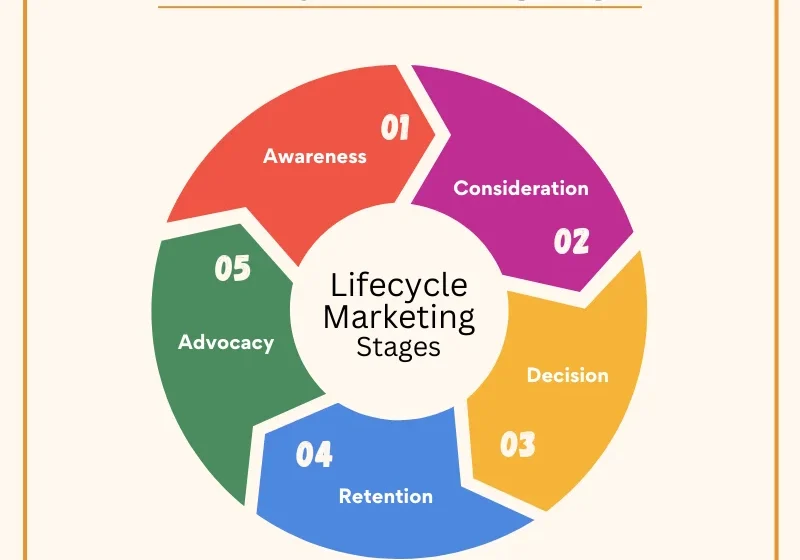
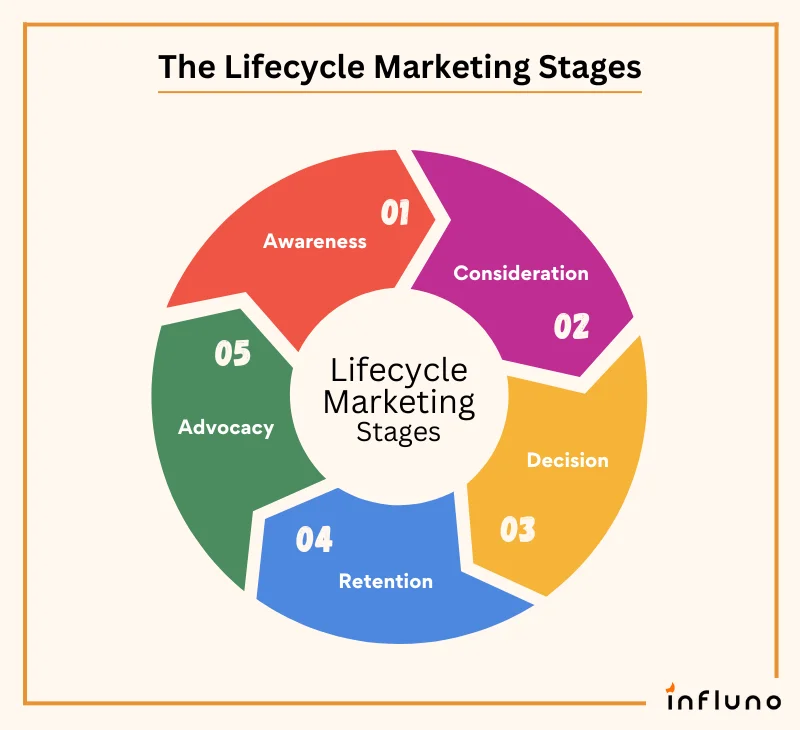
Lifecycle marketing isn’t just a buzzword; it’s a fundamental shift in how businesses should think about their customers. It moves you away from seeing people as just numbers or transactions and encourages you to view them as individuals with evolving needs and desires. By focusing on each stage of their journey – from that first spark of awareness, through building trust, making a purchase, becoming a loyal user, and eventually an enthusiastic advocate – you build something far more powerful than a simple customer base. You build a community.
When you invest in understanding and nurturing these relationships, you’re not just increasing sales; you’re creating genuine connections. These connections lead to higher customer satisfaction, reduced churn rates, increased loyalty, and a much more stable and profitable business in the long run. It’s about being there for your customers, anticipating their needs, and consistently delivering value, every step of the way. And just like any good relationship, the effort you put in today will yield incredible rewards for years to come.