Customer Advocacy Growth Strategy: Turning Loyal Customers into Powerful Brand Promoters

In today’s competitive digital marketplace, businesses can no longer rely solely on traditional advertising to achieve sustainable growth. Consumers are increasingly skeptical of promotional messages from brands, while placing far greater trust in recommendations from friends, family, and fellow customers. This shift in consumer behavior has led many successful companies to adopt a powerful approach known as the customer advocacy growth strategy.
Customer advocacy is the process of transforming satisfied customers into enthusiastic supporters who actively promote a brand, product, or service. These advocates share positive experiences, recommend products to others, and help amplify brand credibility in a way that paid marketing often cannot achieve. When implemented effectively, customer advocacy becomes one of the most efficient and scalable growth strategies available to modern businesses.
This article explores the concept of customer advocacy growth strategy, its importance, core components, and practical steps businesses can take to build strong advocacy-driven growth.
Understanding Customer Advocacy
Customer advocacy occurs when customers voluntarily promote a brand because they genuinely believe in its value. Unlike traditional marketing campaigns that rely on paid media, customer advocacy is driven by authentic experiences and emotional connections with a brand.
An advocate typically does the following:
- Recommends products to friends and colleagues
- Shares positive reviews and testimonials
- Posts about the brand on social media
- Participates in referral programs
- Provides feedback and product insights
These behaviors create a powerful ripple effect. A single enthusiastic customer can influence many potential buyers, significantly expanding a brand’s reach without additional advertising costs.
Why Customer Advocacy Matters for Growth
A customer advocacy growth strategy is powerful because it aligns with how modern consumers make decisions.
1. Trust Drives Purchase Decisions
Studies consistently show that consumers trust recommendations from other customers far more than brand advertisements. Word-of-mouth referrals carry a level of credibility that traditional marketing cannot easily replicate.
2. Lower Customer Acquisition Costs
Acquiring new customers through advertising can be expensive. Customer advocacy helps reduce acquisition costs by generating organic referrals and recommendations.
3. Higher Customer Lifetime Value
Customers who become advocates often demonstrate higher loyalty, repeat purchase behavior, and stronger engagement with the brand.
4. Stronger Brand Reputation
Positive reviews, testimonials, and social media mentions strengthen brand credibility and improve the perception of quality and reliability.
The Customer Advocacy Growth Framework
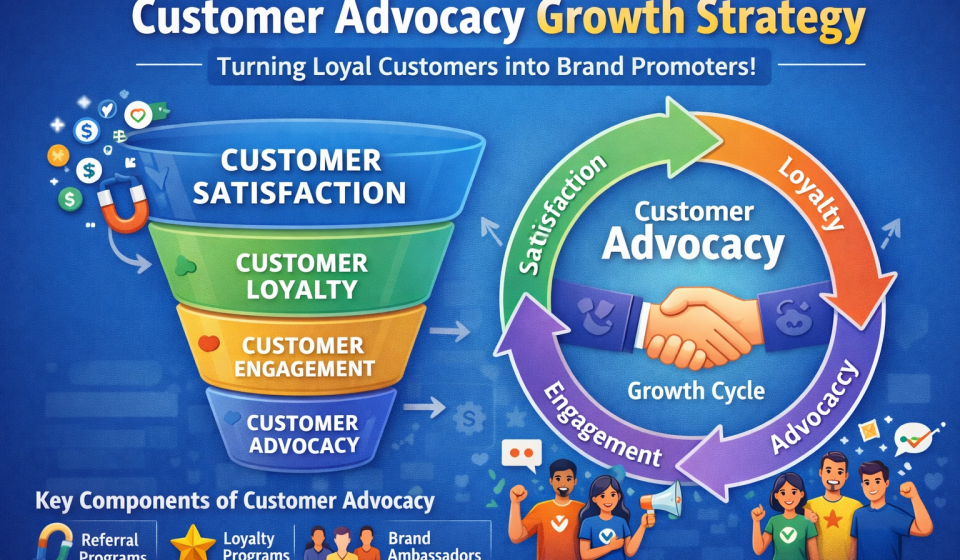
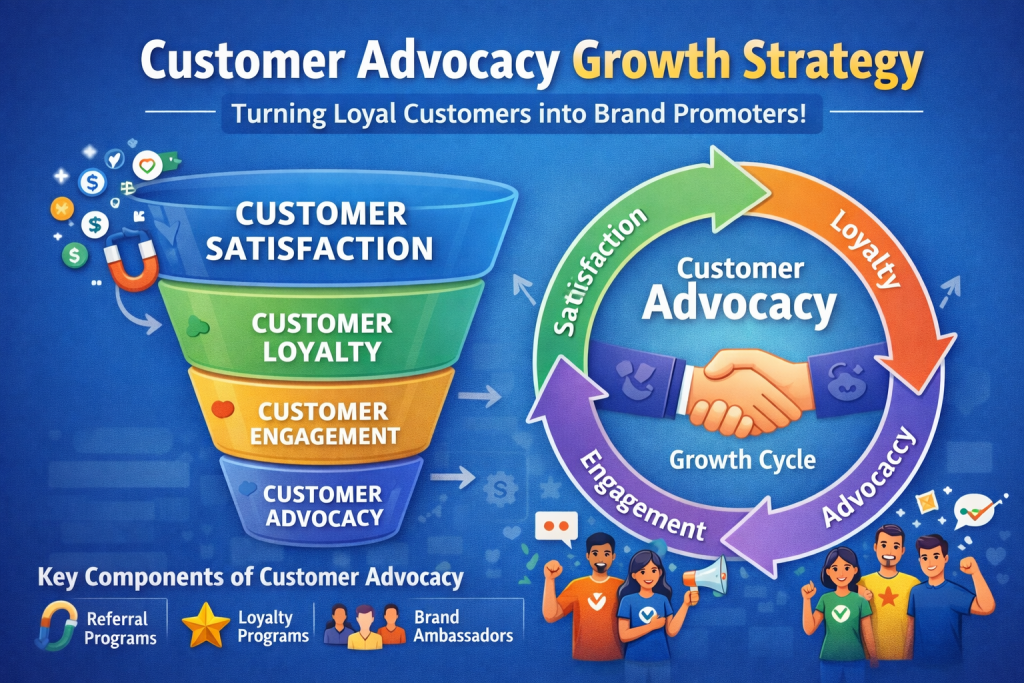
A successful customer advocacy growth strategy usually follows a structured process that moves customers through several stages.
1. Customer Satisfaction
Advocacy begins with delivering an excellent product or service experience. If customers are not satisfied, advocacy cannot exist.
Businesses must focus on:
- Product quality
- Customer support
- User experience
- Reliability and trust
Customer satisfaction forms the foundation of advocacy.
2. Customer Loyalty
Satisfied customers may continue purchasing, but loyal customers develop a deeper emotional connection with the brand.
Loyalty can be strengthened through:
- Loyalty programs
- Personalized experiences
- Consistent service quality
- Community engagement
At this stage, customers begin to identify with the brand and prefer it over competitors.
3. Customer Engagement
Engaged customers interact frequently with a brand through various channels such as email, social media, online communities, and product feedback.
Engagement strategies include:
- Interactive content
- Social media conversations
- User-generated content campaigns
- Community forums
- Product feedback programs
Higher engagement increases the likelihood that customers will eventually become advocates.
4. Customer Advocacy
When customers become advocates, they voluntarily promote the brand.
Advocacy behaviors include:
- Writing product reviews
- Sharing testimonials
- Posting about products online
- Recommending products to friends
- Participating in referral programs
Advocates become an extension of the marketing team by spreading positive brand messages organically.
Key Components of a Customer Advocacy Growth Strategy
Building a strong advocacy-driven growth engine requires several strategic elements.
1. Exceptional Customer Experience
Customer advocacy begins with delivering experiences that exceed expectations.
Companies that consistently create advocates often focus heavily on:
- Fast and helpful customer support
- Transparent communication
- Reliable product performance
- Continuous improvement based on feedback
When customers feel valued and supported, they are far more likely to promote the brand.
2. Encouraging Customer Reviews
Online reviews are a critical component of customer advocacy.
Positive reviews influence purchase decisions and increase brand credibility.
Businesses can encourage reviews by:
- Sending post-purchase review requests
- Simplifying the review process
- Highlighting customer testimonials
- Rewarding feedback participation
Authentic reviews from real customers are among the most powerful forms of advocacy.
3. Referral Programs
Referral programs turn satisfied customers into active promoters by rewarding them for recommending the brand to others.
A typical referral program may include:
- Discounts for both referrer and new customer
- Cashback rewards
- Exclusive perks
- Loyalty points
Referral-based growth is highly effective because it leverages trust between individuals.
4. User-Generated Content
User-generated content (UGC) includes photos, videos, reviews, and social media posts created by customers.
UGC strengthens brand authenticity and creates social proof.
Examples include:
- Customers sharing product experiences on Instagram
- Video testimonials on YouTube
- Customer stories on company websites
- Product usage photos
Encouraging UGC can dramatically increase brand visibility.
5. Brand Communities
Online communities allow customers to connect with each other and share experiences related to a brand.
These communities can exist on:
- Social media groups
- Dedicated forums
- Brand ambassador programs
- Online discussion platforms
Strong communities foster deeper brand loyalty and encourage advocacy.
Identifying Potential Brand Advocates
Not every satisfied customer becomes an advocate. Businesses must identify customers who are most likely to promote the brand.
Common indicators include:
- Frequent purchases
- High engagement with brand content
- Positive feedback and reviews
- Social media mentions
- Participation in surveys or community discussions
Tools such as Net Promoter Score (NPS) surveys can help identify highly satisfied customers who are more likely to recommend the brand.
Strategies to Activate Customer Advocacy
Once potential advocates are identified, companies can encourage advocacy through several strategies.
1. Create an Ambassador Program
Brand ambassador programs recruit passionate customers to represent the brand.
Ambassadors may receive:
- Early access to products
- Exclusive merchandise
- Special discounts
- Recognition within the community
These programs turn enthusiastic customers into long-term brand partners.
2. Showcase Customer Success Stories
Sharing customer success stories builds credibility and encourages other customers to share their experiences.
Examples include:
- Case studies
- Video testimonials
- Customer spotlight articles
- Social media features
Recognition motivates customers to continue promoting the brand.
3. Provide Shareable Content
Customers are more likely to promote a brand when sharing content is easy.
Businesses can provide:
- Shareable social media posts
- Referral links
- Branded hashtags
- Interactive campaigns
Simplifying the sharing process increases advocacy participation.
4. Reward Advocacy
While advocacy should remain authentic, incentives can encourage participation.
Possible rewards include:
- Loyalty points
- Exclusive discounts
- Free products
- VIP experiences
However, transparency is essential to maintain trust.
Measuring Customer Advocacy Success
Businesses must track key metrics to understand the effectiveness of their advocacy strategies.
Important metrics include:
- Net Promoter Score (NPS)
- Referral conversion rate
- Customer lifetime value
- Review volume and ratings
- Social media mentions
- User-generated content engagement
Monitoring these metrics helps businesses refine their strategies and maximize impact.
Challenges in Customer Advocacy
Although powerful, customer advocacy strategies also present challenges.
Common obstacles include:
Maintaining Authenticity
Customers can detect inauthentic promotion. Advocacy must remain genuine to preserve credibility.
Managing Negative Feedback
Customer feedback may include criticism. Businesses must respond constructively and demonstrate commitment to improvement.
Scaling Advocacy Programs
Managing large communities and ambassador programs requires resources, systems, and consistent engagement.
Despite these challenges, companies that invest in advocacy often see significant long-term benefits.
Real-World Impact of Customer Advocacy
Many successful companies attribute much of their growth to strong customer advocacy.
Brands that prioritize customer experience and community engagement often benefit from:
- Viral word-of-mouth marketing
- Strong online reputations
- Loyal customer bases
- Lower marketing costs
- Sustainable growth
Customer advocates effectively become trusted brand representatives within their own networks.
The Future of Customer Advocacy
As digital communication continues to evolve, customer advocacy will become even more important.
Future trends may include:
- AI-powered customer engagement
- Personalized advocacy programs
- Micro-influencer advocacy communities
- Advanced referral tracking systems
- Community-driven product development
Companies that integrate advocacy into their long-term growth strategy will likely outperform competitors that rely solely on traditional marketing.
Conclusion
A customer advocacy growth strategy transforms loyal customers into powerful brand promoters who help drive sustainable business growth. By focusing on exceptional customer experiences, building strong relationships, and encouraging authentic recommendations, businesses can create a self-reinforcing cycle of trust, engagement, and expansion.
Rather than relying entirely on expensive advertising campaigns, organizations can leverage the enthusiasm of satisfied customers to reach new audiences and build credibility in the marketplace.
In the modern digital economy, the most effective marketing often comes not from brands themselves, but from the voices of happy customers. Companies that recognize and cultivate this power will gain a lasting competitive advantage.
Customer advocacy is not just a marketing tactic—it is a long-term growth engine capable of transforming customers into the strongest ambassadors a brand could ever have.