
The Unstoppable Force: How Rapid Iteration Propels Businesses to Unprecedented Growth
Imagine a world where building a business felt like sailing a ship in uncharted waters. You’d spend months, maybe even years, meticulously designing every plank, every sail, every rudder. You’d launch with a grand fanfare, only to discover, mid-ocean, that the winds had shifted, the map was wrong, or worse, your passengers preferred flying. This isn’t just a metaphor; it’s how many businesses used to operate, and sadly, how some still do. They commit enormous resources upfront, hoping for a perfect launch, only to be met with the harsh realities of a constantly evolving market.
But what if there was a different way? A way to navigate those waters by constantly adjusting your sails, testing the currents, and even redesigning parts of your ship while you’re sailing? This isn’t science fiction; it’s the Rapid Iteration Growth Model, a transformative approach that has become the secret weapon for countless successful startups and established enterprises alike. It’s about learning, adapting, and growing at an incredible pace, turning market uncertainty into a competitive advantage.
The Genesis of Agility: Moving Beyond the Blueprint
Let’s rewind a bit. Think about the traditional product development lifecycle. It often looked like a waterfall: requirements gathered, design finalized, development executed, testing performed, and finally, deployment. Each stage flowed into the next, and going back upstream was akin to fighting a strong current – costly and difficult. This made sense in an era where market demands were stable, and technological change was slow. But today? Today, yesterday’s innovation is tomorrow’s obsolete tech. Consumer preferences swing wildly, and new competitors emerge overnight.
Enter the Agile development mindset, a philosophy born in the software world but now embraced across industries. Agile taught us that instead of planning everything perfectly upfront, it’s better to work in small, manageable cycles, constantly gathering feedback and adjusting course. The Rapid Iteration Growth Model takes this agility and supercharges it, applying its principles not just to product development but to every facet of business growth: marketing, sales, operations, and even internal processes. It’s a holistic approach to building a scalable business model that thrives on change.
Meet "SwiftCharge": A Fictional Journey into Rapid Iteration
To truly grasp this concept, let’s follow a fictional startup called SwiftCharge. They aimed to create a portable, super-fast phone charger. Their initial idea was a sleek, high-capacity device with multiple ports and advanced safety features. A traditional approach would have seen them spend a year in R&D, raise millions, and launch a polished product.
But SwiftCharge’s founders, Liam and Chloe, had read about the Lean Startup methodology. They knew the dangers of building something nobody wanted. Instead, they decided to embrace rapid iteration.
Phase 1: The Minimum Viable Product (MVP) – The Humble Beginning
Liam and Chloe didn’t build their dream charger right away. Their first step was to identify the absolute core value proposition: fast charging on the go. They stripped away all but the most essential features. Their Minimum Viable Product (MVP) wasn’t even a fully functional device. It was a crude prototype: a small, basic power bank that could charge one phone, but it did it fast. They didn’t care about aesthetics or extra ports yet. Their goal was to test one crucial assumption: "Do people truly value super-fast portable charging enough to pay for it, even if the device is basic?"
They didn’t launch it to the masses. Instead, they approached a small group of early adopters – friends, family, and tech enthusiasts – and offered them the MVP. This wasn’t about making money yet; it was about market validation. They observed how these users interacted with the device, what problems they encountered, and what features they wished it had. This immediate, direct customer feedback loop was invaluable.
High-CPC Keyword Alert: Minimum Viable Product (MVP), Lean Startup Methodology, Market Validation, Customer Feedback Loop. These are critical concepts for anyone looking to optimize their business growth strategy and drive their digital transformation.
Phase 2: The Data-Driven Dance – Listen, Learn, Adapt
The feedback from SwiftCharge’s MVP users was illuminating. People loved the speed but consistently asked for more capacity and a second port. Some found the form factor a bit clunky. Instead of getting defensive, Liam and Chloe saw these as opportunities. They used this qualitative feedback, combined with some basic usage data (how often it was charged, how long it lasted), to inform their next iteration.
This is where data-driven decision making truly shines. It’s not about gut feelings; it’s about making choices based on evidence. They realized that while speed was a differentiator, capacity and convenience (multiple ports) were significant unmet needs.
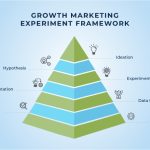
Their next iteration addressed these points. They designed a slightly larger, more ergonomic device with a higher capacity battery and two charging ports. This wasn’t their final product, but it was a significant improvement based directly on user input. They repeated the process: tested it with another small group, gathered more feedback, and collected more data. They were essentially running a series of controlled experiments with each iteration, validating assumptions and refining their product.
High-CPC Keyword Alert: Data-driven decision making, Experimentation framework, User experience (UX) optimization, Product roadmap. These elements are crucial for achieving product-market fit and ensuring continuous improvement.
Phase 3: Building a Feedback Machine – The Engine of Growth
As SwiftCharge grew, so did their iteration process. They understood that continuous feedback wasn’t a one-time event; it was the lifeblood of their operation. They implemented systems for ongoing feedback:
- In-app surveys: Short, contextual questions asking users about specific features.
- User testing sessions: Observing users interact with new prototypes in a controlled environment.
- Customer support insights: Analyzing common complaints and feature requests.
- A/B testing: Running simultaneous experiments where half their users saw one version of a feature and the other half saw a slightly different version, measuring which performed better. This allowed them to fine-tune everything from button placement to pricing strategies.
This constant stream of information allowed them to make rapid adjustments, ensuring their product was always evolving to meet and exceed user expectations. Their customer acquisition cost (CAC) remained low because word-of-mouth spread about a product that truly understood its users, leading to a high Lifetime Value (LTV) for their customers.
High-CPC Keyword Alert: Customer feedback loop, A/B testing, User stories, Customer acquisition cost (CAC), Lifetime Value (LTV). These are directly tied to effective growth hacking strategies and achieving startup success metrics.
The Pillars of the Rapid Iteration Growth Model
SwiftCharge’s journey illustrates the core tenets of this powerful model:
-
Embrace the MVP Mindset: Start small, focus on the core value, and get something usable into the hands of users as quickly as possible. Don’t aim for perfection; aim for learning. This helps validate your assumptions and reduces the risk of building something nobody wants.
-
Obsess Over Customer Feedback: This isn’t just about surveys; it’s about deep empathy. Listen actively, observe user behavior, and create channels for continuous dialogue. Every piece of feedback is a gift, showing you where to improve. This fuels your product roadmap and ensures you’re always aligned with customer needs.
-
Be Data-Driven, Not Just Data-Aware: Collect relevant metrics, analyze them rigorously, and let them guide your decisions. Whether it’s user engagement, conversion rates, or churn, data provides objective insights that can cut through assumptions and biases. This is the bedrock of business agility.
-
Iterate Rapidly and Continuously: Break down large projects into small, manageable iterations (often called "sprints" in the Scrum framework). Develop, test, deploy, and learn in short cycles, typically weeks, not months. This allows for quick course correction and prevents wasted effort. This approach is central to modern software development lifecycle (SDLC) practices.
-
Cultivate a Culture of Experimentation: Encourage hypotheses, testing, and learning from failures. Not every experiment will succeed, but every experiment provides valuable insights. This fosters innovation process and allows for daring but calculated risks. This is how you gain a significant competitive advantage.
-
Focus on Growth Metrics: Beyond traditional financial metrics, prioritize metrics that indicate actual user engagement and growth, such as user acquisition, activation, retention, revenue, and referral (AARRR funnel). These metrics provide a clear picture of whether your iterations are truly driving growth.
Why Rapid Iteration Matters: Beyond Just Speed
The benefits of the Rapid Iteration Growth Model extend far beyond simply launching products faster:
- Reduced Risk: By testing assumptions early and often, you avoid sinking significant resources into ideas that won’t fly. You fail fast, learn faster, and pivot before it’s too late. This is crucial for navigating market entry strategy in volatile sectors.
- Market Relevance: Your product or service constantly evolves with market demands, ensuring you remain relevant and competitive. This helps you achieve sustainable product-market fit.
- Higher Customer Satisfaction: By directly incorporating user feedback, you build products that truly resonate with your audience, leading to greater loyalty and advocacy. This optimizes user experience (UX) optimization.
- Faster Time to Market for Right Products: While initial MVPs might be basic, the iterative process quickly refines them into highly desirable products, getting the right solutions to market faster.
- Empowered Teams: Teams working in iterative cycles are more engaged, autonomous, and feel a greater sense of ownership and impact. This fosters a culture of business agility and continuous learning.
- Unlocking Disruptive Innovation: By constantly experimenting and challenging assumptions, companies can stumble upon truly novel solutions that create disruptive innovation and open new market segments.
Common Pitfalls and How to Avoid Them
While powerful, rapid iteration isn’t a magic bullet. There are traps to avoid:
- Iteration for Iteration’s Sake: Don’t just make changes because you can. Every iteration should be driven by a clear hypothesis, backed by data, and aimed at a specific growth metric.
- Ignoring the "Why": Without understanding the underlying problem you’re solving for the customer, you risk building features nobody wants, even if they asked for them. Dig deeper than surface-level requests.
- Fear of Pivoting: Sometimes, the data will tell you your core assumption was wrong. The ability to pivot – to change direction significantly – is a strength, not a weakness. It saves time and resources.
- Analysis Paralysis: While data is crucial, don’t get stuck endlessly analyzing. Make a decision, test it, and move on. "Done is better than perfect" applies here.
- Lack of Clear Metrics: If you don’t define what success looks like for each iteration, you won’t know if your changes are actually driving growth.
- Forgetting the Big Picture: While focusing on small iterations, it’s essential to keep your overall vision and product roadmap in mind. Each sprint should contribute to a larger strategic goal.
Scaling Rapid Iteration: From Startup to Enterprise
You might think this model is only for nimble startups. Not true. Large organizations are increasingly adopting rapid iteration to stay competitive. They might start with small, cross-functional "squads" or "tribes" focusing on specific product areas, allowing them to experiment independently.
For an enterprise, it means breaking down bureaucratic silos, empowering teams, and fostering a culture where learning from failure is celebrated, not punished. It often involves significant digital transformation initiatives to modernize processes and technology stacks. The investment in robust data analytics platforms becomes even more critical to manage the vast amounts of information generated.
The Future is Iterative: Embracing Constant Evolution
The business landscape will only continue to accelerate. The companies that thrive will be those that can adapt, learn, and evolve at the speed of change. The Rapid Iteration Growth Model isn’t just a methodology; it’s a fundamental shift in mindset. It’s about viewing your business as a living, breathing entity, constantly observing its environment, experimenting with new behaviors, and learning what works best.
For anyone looking to build a resilient, customer-centric, and wildly successful enterprise, understanding and implementing rapid iteration is no longer optional; it’s essential. It’s the framework that turns challenges into opportunities, uncertainty into innovation, and small steps into monumental leaps forward. It’s how you build an unstoppable force in any market.